Thinking about moving to Magnolia?
Everything you need to know about relocating to one of the fastest-growing communities in America - neighborhoods, schools, taxes, real estate, and what daily life actually looks like. From people who live here.
Get the printable guide
40 miles northwest of Houston.
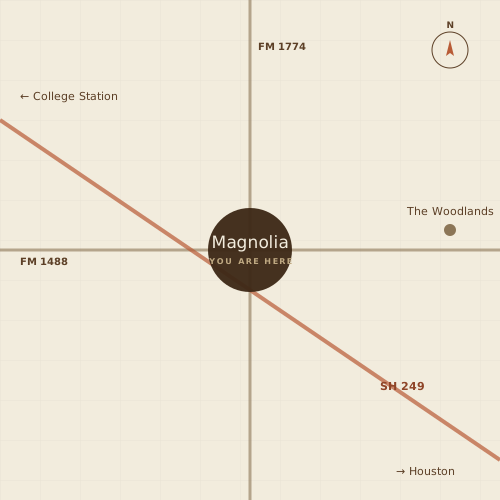
Magnolia sits in southwest Montgomery County, anchored at the crossroads of FM 1488, FM 1774, and SH 249 - the Aggie Expressway. The city limits are small, but the broader area covered by ZIP codes 77354 and 77355 holds more than 40,000 residents.
The honest version.
More space without leaving Greater Houston
Larger lots, newer homes, and quieter streets are the first things most buyers notice.
Strong master-planned communities
Magnolia has several amenity-rich neighborhoods with trails, pools, parks, and active resident calendars.
Access to nature
Weekends can mean Lake Conroe, Sam Houston National Forest, local parks, markets, and outdoor events.
A real small-town center
The Stroll, Unity Park, and local businesses give Magnolia a sense of place beyond subdivision life.
The master-planned communities.
Most newcomers land in one of Magnolia's amenity-rich master plans. Tap any community to see builders, pricing, schools, and available homes.
How new construction compares across Magnolia communities
Magnolia market report: what buyers are asking in 2026
Kresston
Escondido
Audubon
Get our free community comparison worksheet.
A side-by-side breakdown of every major Magnolia neighborhood - price ranges, HOA fees, school zoning, amenities, and commute times.
Magnolia ISD, by the numbers.
The school district is the single most important factor for most families relocating here. Magnolia ISD is one of the more sought-after districts in greater Houston, with test scores generally above state averages and robust AP, IB, and dual-credit programs.
Where you buy matters. Attendance zones are being redrawn as new schools come online, so always verify the current zone before purchasing.
What you'll actually pay.
Texas property taxes are not low, despite no state income tax, but the Magnolia area median effective rate is below the Texas median.
The MUD wrinkle: newer master-planned communities often sit inside Municipal Utility Districts. Ask for the specific MUD rate before locking in.
The texture of daily life.
The downtown. Magnolia has a real downtown, anchored by the 1902 train depot, Unity Park, and The Stroll — an upgraded pedestrian square. Lone Pint Brewery sits at its edge; Yellow House Café is a town institution.
The food. The Meating Place BBQ is the destination smoked-meat spot. There’s a growing crop of independent restaurants and food trucks, with national chains arriving steadily. The local scene is stronger than newcomers expect.
The outdoors. Most communities have their own pools and trails. Lake Conroe is 25 minutes away. Sam Houston National Forest is close. The annual rhythm runs from Mardi Gras on the Stroll in February to Depot Day in spring to the Texas Renaissance Festival — the largest in the country — every fall.
The people. Mostly families, friendly in a real way, not a Texas-cliché way. The day-to-day texture is high school football, weekends at the lake, church potlucks, and neighbors who actually wave.
What newcomers find frustrating.
Anyone who tells you Magnolia is perfect is selling you a house. Here is the stuff people wish they had known.
Commutes can be real
SH 249 helps, but peak-hour drives into Houston still require planning.
Growth is visible
Road work, new subdivisions, and commercial construction are part of daily life.
Property taxes vary
MUD rates and HOA fees can change the monthly cost more than newcomers expect.
Not every area feels the same
East, west, city-limit, and ETJ addresses can have very different services and routines.
Questions movers actually ask.
If yours is not here, just reach out - we will get you a straight answer.
Ready to take the next step?
Talk to a Magnolia relocation specialist. Whether you are 12 months out or driving here next weekend, we will help you cut through the noise.